
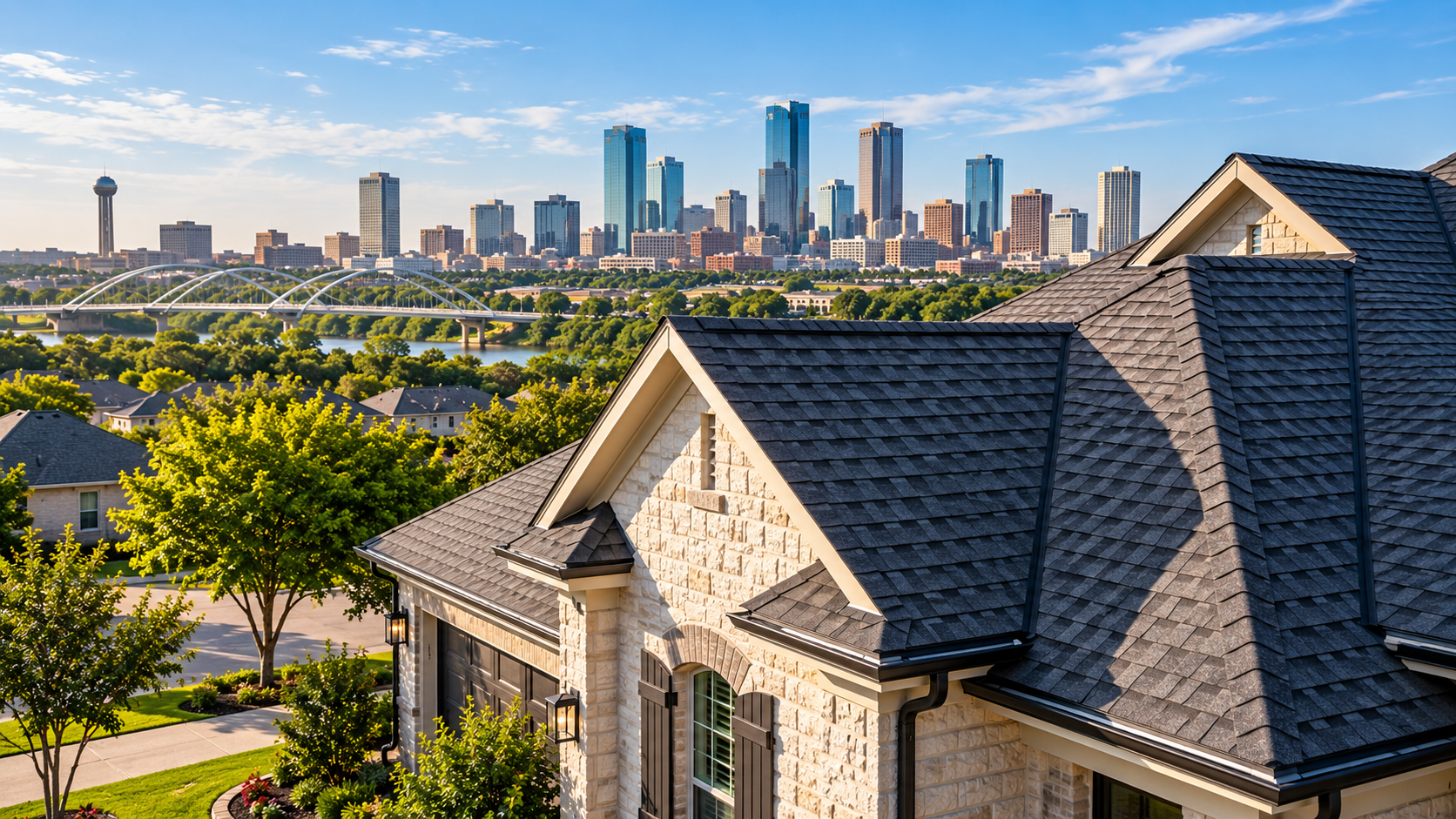
Texas roofs work under demanding conditions. Intense summer sun, prolonged heat, thunderstorms, high winds and hail can all influence how quickly roofing materials age. That is why the answer to how long does a roof last in Texas? depends on both the roofing material and the conditions the roof experiences over its lifetime.
Quick answer: A well-installed asphalt-shingle roof commonly has an expected lifespan of roughly 20 to 30 years, while some architectural shingles and premium systems can last longer. Metal roofing can often provide 40 to 70+ years of service. In Texas, however, heat, UV exposure, hail, wind, installation quality, ventilation and maintenance can shorten or extend those general ranges.
If your roof is aging or you are unsure of its condition, National Install provides professional roofing services in Fort Worth and across the DFW area. A roof inspection can tell you much more than age alone.
Average Roof Lifespan by Roofing Material
Roofing materials do not age at the same rate. Manufacturer guidance and industry references generally place asphalt shingles in the multi-decade range, while properly maintained metal and tile systems can last considerably longer.
| Roofing Material | Typical General Lifespan | Texas Considerations |
|---|---|---|
| Three-tab asphalt shingles | About 20–30 years | Heat, UV exposure and storm events may accelerate aging |
| Architectural asphalt shingles | About 30–50 years depending on product | Product quality, ventilation and hail exposure matter |
| Metal roofing | About 40–70+ years | Durable option, but system design and installation remain critical |
| Clay or concrete tile | About 50–100 years | Long-lived material but structure, underlayment and impact exposure matter |
Why Texas Weather Can Shorten Roof Life
Extreme Heat & UV
Texas roofs can experience long periods of intense solar exposure. Heat and ultraviolet radiation contribute to normal material aging and can place additional stress on an inadequately ventilated roof system.
Hail
Hail can cause granule loss, surface depressions, cracking and less-visible damage to asphalt shingles. Damage is not always obvious immediately after a storm.
High Winds
Strong winds can lift or loosen shingles and damage vulnerable edges, flashing and other roof components, particularly when materials are already aged or compromised.
Heavy Rain
Rain itself does not mean a roof is failing, but weaknesses around flashing, penetrations, valleys or damaged shingles can allow water to enter the roofing system.
Does Installation Quality Affect Roof Lifespan?
Absolutely. Even premium shingles cannot perform as intended when the roof system is installed incorrectly. Proper decking preparation, underlayment, flashing, fastener placement, ventilation and drainage all contribute to long-term performance.
This is one reason homeowners should evaluate more than the material warranty when comparing contractors. The quality of the installation and the complete scope of work matter just as much as the name printed on the shingle package. If replacement is approaching, review our Fort Worth roof replacement service before deciding on a system.
Not Sure How Much Life Your Roof Has Left?
Roof age is only one part of the answer. National Install can evaluate the condition of your shingles, flashing, ventilation and visible storm damage so you can understand whether repair, maintenance or replacement makes sense.
How Ventilation Can Influence Roof Performance
A roofing system has to manage conditions above and below the roof deck. Balanced attic ventilation helps move heat and moisture through the attic space. Poor ventilation can contribute to excessive heat and moisture conditions that may affect roof components and indoor comfort.
When replacing a roof, ventilation should be evaluated as part of the complete system rather than treated as an afterthought. Intake and exhaust ventilation should be appropriate for the home’s design and applicable roofing requirements.
Can Hail Damage Reduce the Life of a Roof?
Yes. Hail impacts can damage asphalt shingles in ways that are obvious or subtle. Manufacturer technical guidance notes that hail can cause localized granule loss, depressions, cracks and even damage to the fiberglass mat beneath the surface. Some effects can become more noticeable as the roof continues to age.
After a significant storm, do not assume that every roof requires replacement. A professional inspection can determine whether there is isolated damage suitable for roof repair in Fort Worth or more widespread deterioration that deserves further evaluation.
Signs Your Texas Roof May Be Nearing the End of Its Life
Age is useful context, but visible condition is often more important. Watch for:
- Shingles that are cracked, curled, missing or visibly deteriorated
- Repeated roof leaks or water staining
- Excessive or unusual granule loss
- Damaged or deteriorated flashing
- Recurring repairs in multiple roof areas
- Visible storm or hail damage
- Soft or deteriorated decking discovered during inspection
- A roof approaching the expected service life for its material
If several of these conditions occur together, it may be time to compare repair with replacement rather than continuing to address symptoms individually.
How to Help Your Roof Last Longer in Texas
You cannot control the weather, but preventive care can help you identify problems before they become larger failures.
Inspect Regularly
Have the roof evaluated periodically and after significant hail, wind or storm events, particularly when visible damage is present.
Fix Small Problems Early
A loose flashing detail or damaged shingle is generally easier to address before water reaches decking, insulation or interior finishes.
Keep Drainage Clear
Gutters and downspouts should move water away efficiently. If drainage needs attention, see our gutter services.
Choose the Right System
When replacement is necessary, select materials and system components appropriate for the home’s design and North Texas weather exposure.
Should You Replace a Roof Just Because It Is 20 Years Old?
Not automatically. Twenty years is an important milestone for many asphalt roofs, but age alone does not establish whether a roof has failed. Material type, installation, maintenance, ventilation, storm history and present condition all matter.
A professional inspection is especially useful when you do not know the roof’s installation history. It can help identify whether the roof remains serviceable, needs targeted repairs or is approaching replacement.
Repair or Replace: Which Makes More Sense?
Repair can be appropriate when damage is localized and the rest of the roof remains in good condition. Replacement becomes more compelling when deterioration is widespread, leaks recur, storm damage affects multiple areas or the roof is near the end of its practical service life.
If cost is part of your decision, our guide to roof replacement cost in Fort Worth explains the factors that influence a new-roof estimate.
Frequently Asked Questions About Roof Lifespan in Texas
How long does an asphalt shingle roof last in Texas?
A general planning range is about 20 to 30 years for many asphalt-shingle roofs, while some architectural products may have longer expected service lives. Texas heat, UV exposure, storms, installation quality and maintenance can materially affect the actual lifespan.
How long does a metal roof last in Texas?
Many metal roofing systems can provide roughly 40 to 70 years or more of service when properly designed, installed and maintained. Actual performance depends on the specific product, coatings, environment and installation.
Does Texas heat damage roof shingles?
Long-term heat and UV exposure contribute to roofing-material aging. Proper material selection and attic ventilation can help the overall roof system manage demanding Texas conditions.
Can one hailstorm shorten a roof’s lifespan?
Potentially. Hail can cause granule loss, cracking, depressions or less-visible shingle damage. The severity depends on hail size and hardness, wind, roof material, roof age and the angle of impact.
How often should a Texas roof be inspected?
Periodic professional inspections are useful, and an additional inspection is sensible after severe hail, high winds or other major weather events when damage is suspected.
Get a Professional Roof Evaluation in Fort Worth
If you are wondering whether your roof has five years left or needs attention now, its condition matters more than a generic age chart. National Install provides roofing solutions for homeowners in Fort Worth and surrounding DFW communities. Explore our roofing services or view our service areas.