
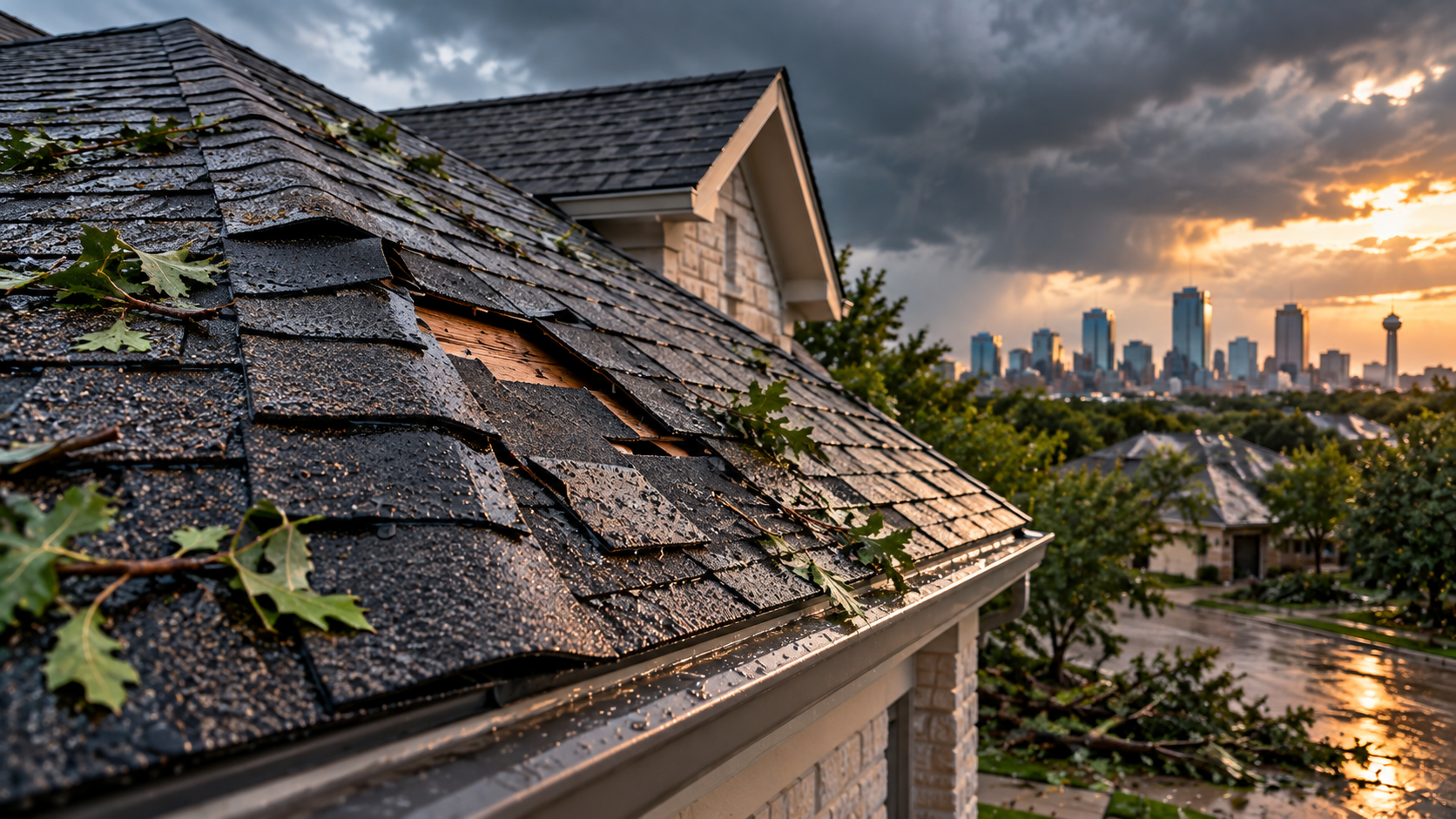
North Texas weather can change quickly. A roof that looked perfectly normal before a thunderstorm may be exposed to strong winds, hail, wind-driven rain and falling debris within minutes. The challenge for homeowners is knowing whether the storm caused cosmetic wear, a repairable roofing problem or more extensive damage.
National Install provides roof repair services in Fort Worth and surrounding DFW communities. Knowing the warning signs can help you respond early, reduce the chance of water intrusion and make a better-informed decision about what your roof needs.
7 Signs Your Roof May Need Repair After a Texas Storm
1. Missing or Lifted Shingles
High winds can loosen, crease, lift or completely remove shingles. Even a relatively small exposed area can leave the underlying roofing system more vulnerable to rain.
2. New Leaks or Ceiling Stains
Water spots, damp drywall, dripping water or new discoloration after a storm can indicate that water has entered through the roof or a related flashing detail.
3. Hail Marks or Shingle Damage
Hail can affect shingles differently depending on hail size, wind speed, roof age and roofing material. Damage may appear as impact marks, bruising or loss of protective granules.
4. Damaged Flashing
Flashing around chimneys, walls, vents and roof transitions helps keep water out. Wind or debris can loosen or damage these components and create leak pathways.
5. Excessive Granules
Some granule loss is normal as asphalt shingles age, but a noticeable increase in gutters or downspouts following hail may justify a closer roof evaluation.
6. Damaged Roof Vents
Metal vents and other rooftop components can show dents or impact damage after severe hail. These components should be checked along with the surrounding roofing material.
7. Fallen Branches or Debris
Branches and windblown objects can puncture shingles, damage decking or affect gutters. Impact areas should be evaluated even when the damage appears small from the ground.
Also Check Your Gutters
Loose sections, dents, overflowing areas or downspout problems can accompany roof damage. Gutters are part of the home’s overall rainwater-management system.
Why Storm Damage Is Not Always Obvious
Some roof problems are easy to identify. A missing shingle or a branch resting on the roof is visible. Other problems can be subtle, especially when viewed from the driveway. Hail impacts may not create an immediate leak, and wind can disturb shingles without removing them completely.
This is one reason a post-storm assessment should consider the entire roofing system rather than one visible spot. Roof age and pre-existing condition also matter. A newer, well-maintained roof may respond differently to the same storm than an older roof already showing deterioration.
What to Check From the Ground After a Storm
A Simple Homeowner Checklist
- Look for shingles or roofing pieces on the lawn or driveway.
- Check roof edges for visibly lifted or missing shingles.
- Look for fallen branches or debris resting on the roof.
- Inspect gutters and downspouts for obvious dents, separation or damage.
- Check ceilings and attic-accessible areas for new moisture or stains.
- Photograph safely visible damage for your records.
- Arrange a professional inspection if the storm involved significant hail, wind or suspected roof damage.
If you are unsure whether the problem is repairable or more extensive, our guide to roof repair vs. roof replacement explains the factors that usually influence that decision.
How Wind Can Damage a Roof
Strong wind places pressure on roof edges, corners and other vulnerable areas. If a shingle becomes lifted, its seal can be compromised, increasing the possibility of additional movement during future storms. Wind can also move branches and debris across the roof surface.
A missing shingle is an obvious reason to request service, but shingles that remain in place can also warrant attention if they are visibly lifted, torn or creased. National Install’s Fort Worth roofing team can evaluate the overall condition and identify areas that may require repair.
How Hail Can Affect Texas Roofs
Hail is a common concern for North Texas homeowners, but its effect on a roof varies. Hailstone size, density, wind direction, roof slope, material type and the existing condition of the roof all influence the result.
On asphalt shingles, hail can displace surface granules or create impact areas. Metal vents, gutters and other components may also show dents. Importantly, not every mark on a roof is storm damage, and not every hailstorm means a roof needs replacement. A condition-based inspection is the appropriate starting point.
Our next storm guide, What Does Hail Damage Look Like on a Roof?, will cover common hail indicators in greater detail.
Think Your Fort Worth Roof Was Damaged in a Storm?
Have National Install evaluate the roof before a small storm-related problem has the opportunity to become a larger water-intrusion issue.
Does a Roof Leak Always Appear Immediately?
No. Some leaks become obvious during the storm, while others may take time to show inside the home. Water can travel along decking, framing or other building components before becoming visible on a ceiling. This means the interior stain may not be directly beneath the exterior entry point.
If you see fresh staining after severe weather, document the area and arrange an inspection. Repeated moisture can damage interior finishes and other materials, so identifying the source matters even when the leak appears minor.
Repair or Replacement After Storm Damage?
The presence of storm damage does not automatically determine the scope of work. A localized issue on an otherwise serviceable roof may be suitable for repair. More widespread damage on an aging roof may lead a homeowner to compare repair with roof replacement in Fort Worth.
Useful factors include the roof’s age, the number of affected areas, condition of surrounding shingles, prior repair history and the expected remaining service life. Read when to replace a roof in Fort Worth and how long roofs last in Texas for additional context.
What Should You Do Immediately After Roof Storm Damage?
Document What You Can See Safely
Take photographs of visible exterior and interior conditions without climbing onto the roof. Record the approximate storm date and any changes you noticed afterward.
Protect the Interior Where Practical
If water is entering the home, move belongings away from the affected area and use containers to catch drips when it is safe to do so. Do not enter areas with electrical hazards or significant structural damage.
Schedule a Roof Inspection
A professional assessment can identify the source and extent of roofing problems and help determine whether repair or replacement should be considered.
Review Your Insurance Policy if Appropriate
Coverage depends on the specific policy, cause of loss, exclusions and deductible. Your insurance company determines coverage under the policy. A roofing contractor can document observed conditions and provide information about the roofing work that may be needed.
Don’t Forget Storm-Damaged Gutters
Roof and gutter systems work together. Hail can dent gutters, wind can loosen sections, and debris can block water flow. A damaged gutter system can allow water to discharge where it should not, including close to the foundation or landscaping.
National Install also provides gutter services in Fort Worth and DFW. If a storm affected both the roof and drainage system, evaluating them together can provide a clearer picture of the home’s exterior protection.
Frequently Asked Questions About Roof Damage After Texas Storms
How soon should I inspect my roof after a storm?
You can perform a safe ground-level visual check once conditions have cleared. If you experienced significant hail, strong winds, falling debris or signs of water intrusion, arrange a professional inspection promptly.
Can a roof have storm damage without leaking?
Yes. Some damage does not produce an immediate interior leak. Lifted shingles, hail impacts or damaged flashing can exist before water becomes visible inside the home.
Do missing shingles need to be repaired quickly?
Missing shingles can expose underlying roofing components to weather, so the affected area should be evaluated rather than left open to repeated rain and wind.
Does hail damage always mean I need a new roof?
No. The appropriate scope depends on the severity and extent of damage, roof material, roof age and overall condition. An inspection should come before deciding between repair and replacement.
Should I inspect the gutters after hail?
Yes. Gutters, downspouts and metal components can provide useful evidence of storm exposure and may also require repair if they were dented, loosened or blocked by debris.
Schedule Roof Repair in Fort Worth After Severe Weather
Texas storms are part of owning a home in North Texas, but roof damage should not be ignored simply because the storm has passed. Catching missing shingles, damaged flashing, leaks or debris impacts early can help prevent a localized problem from developing into a larger repair.
National Install serves Fort Worth and surrounding DFW service areas with roof repair, roof replacement and gutter services. If your roof was recently exposed to severe weather, request a free estimate or learn more about our Fort Worth roof repair services.