
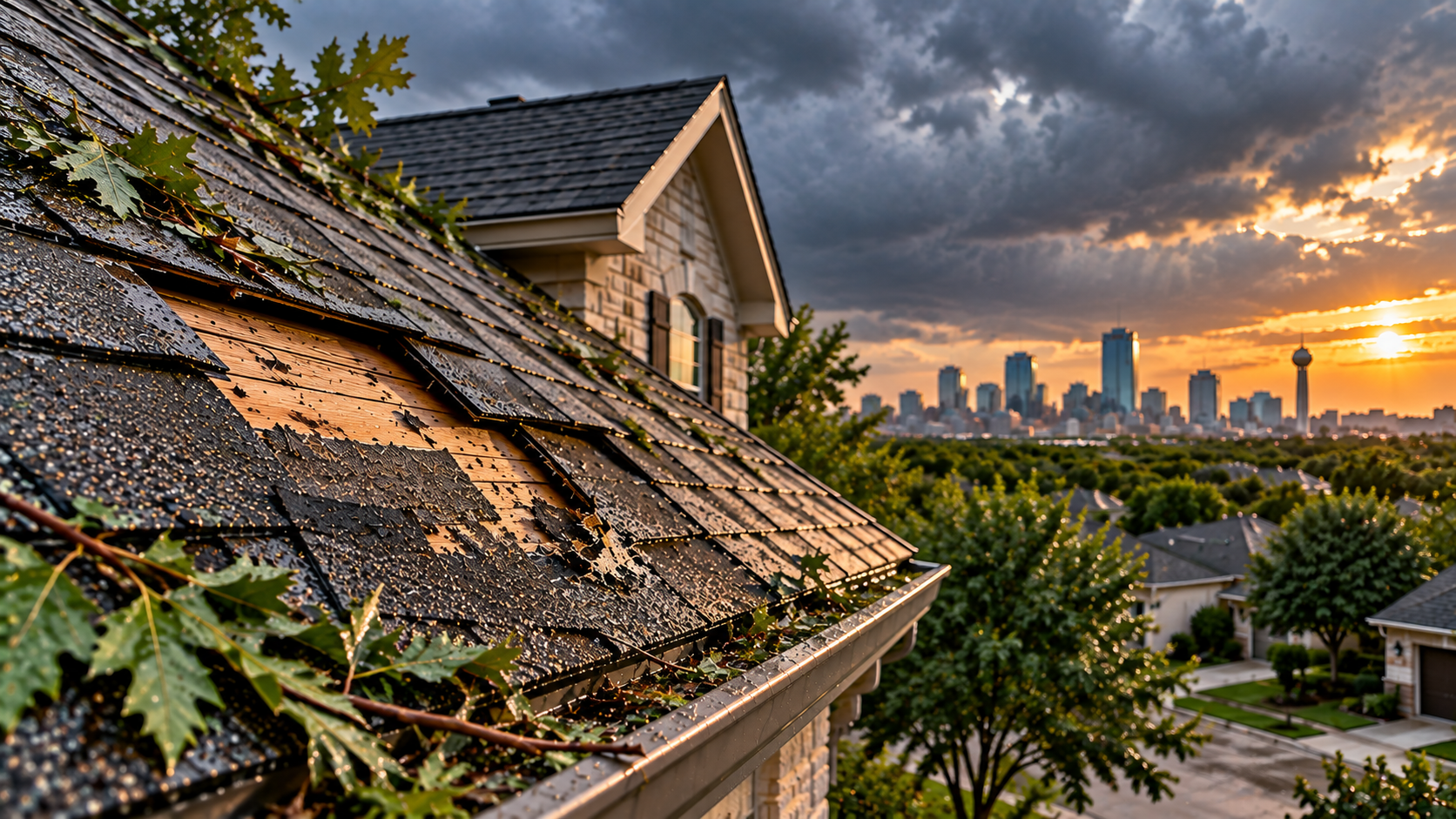
Severe weather in Fort Worth can bring high winds, hail, heavy rain and falling debris. Even when a storm lasts only a short time, the effects on a roofing system can range from a few lifted shingles to leaks, damaged flashing, punctures or more widespread problems.
What you do immediately afterward matters. A calm, step-by-step response can help protect the home, preserve useful documentation and give you a clearer understanding of whether you need roof repair in Fort Worth or a broader roofing solution.
What to Do After Storm Damage to Your Roof in Fort Worth
Make Safety the First Priority
Stay away from downed power lines, unstable trees, standing water near electrical sources and visibly compromised areas of the home. If the property has major structural damage, follow emergency guidance before inspecting anything further.
Check for Visible Damage From the Ground
Once conditions are safe, look for missing shingles, roof debris, damaged gutters, fallen branches, loose flashing or other obvious changes. Binoculars can help you observe the roof without climbing onto it.
Document What You See
Take clear photos and videos of visible exterior damage, interior leaks, ceiling stains, damaged gutters and debris. Record the storm date and the areas of the home that appear affected.
Limit Additional Interior Damage
If water is entering the home, move furniture and valuables away from the area and use containers to catch drips when it is safe. Avoid touching wet electrical fixtures, wiring or ceilings that appear unstable.
Arrange a Professional Roof Inspection
A qualified roofing contractor can evaluate shingles, flashing, vents, gutters and other components to determine the extent of visible damage and recommend appropriate repairs.
Review Your Insurance Policy if Needed
If you believe the damage may be covered, review your policy, deductible and reporting requirements and contact your insurer. The insurance company determines coverage under the terms of your policy.
Why You Should Not Wait for a Leak
Some storm damage creates an immediate leak, but not all roofing problems become obvious inside the home right away. Wind can lift or crease shingles without removing them, hail can affect the shingle surface, and flashing can loosen enough to become a future water-entry point.
This is why waiting for a ceiling stain is not always the best test of roof condition. If your area experienced significant hail, strong winds or debris impacts, a professional inspection can help identify conditions that may not be visible from the driveway.
Our guide to signs your roof needs repair after a Texas storm explains the most common warning signs in more detail.
Common Types of Storm Damage in Fort Worth
Missing or Lifted Shingles
Strong winds can break the seal on shingles, lift edges, crease tabs or remove sections entirely. Exposed areas can become more vulnerable during the next rain.
Hail Impact Damage
Hail can create localized impact marks, bruising or granule loss on asphalt shingles and may also dent metal roof components.
Flashing and Vent Damage
Storms can loosen or damage flashing around chimneys, vents, roof-to-wall transitions and penetrations, creating potential leak pathways.
Gutter Damage
Hail, branches and heavy debris can dent, loosen or clog gutters and downspouts, reducing the system’s ability to move rainwater away from the home.
Fallen Tree Limbs
Branches can puncture shingles, damage decking and affect gutters or fascia. Large impacts may also create structural concerns that require immediate attention.
Interior Water Stains
Fresh ceiling discoloration, damp drywall or attic moisture after a storm can indicate that water has entered through the roofing system or related components.
How to Document Roof Storm Damage
Good documentation is useful whether the issue turns out to be a small repair or a more extensive project. Keep your photos organized by location and include wide views as well as close-ups of safely visible damage.
Useful Documentation to Keep
- Photos of the front, sides and rear of the home.
- Photos of safely visible roofing debris or missing shingles.
- Photos of damaged gutters, downspouts, vents or exterior trim.
- Photos of ceiling stains, attic moisture or active leaks.
- The approximate date and time of the storm.
- Notes about when you first noticed the damage.
- Any inspection findings and repair estimates you later receive.
Do not create unsafe conditions just to obtain a better photo. Ground-level documentation is enough to begin the process; a professional can inspect areas that require roof access.
Need a Roof Inspection After a Fort Worth Storm?
National Install can evaluate your roof, document visible roofing conditions and explain whether repair or replacement should be considered.
Should You Tarp a Storm-Damaged Roof?
Temporary protection can help reduce additional water intrusion when part of a roof has been opened by storm damage, but roof tarping can be hazardous. Wet shingles, steep slopes, wind and damaged decking all increase the risk of a fall.
If temporary covering is needed, it is safer to have an experienced professional handle roof access. Inside the home, focus on safe measures such as moving belongings and containing drips while avoiding electrical hazards.
When Does Storm Damage Need Roof Repair?
Localized problems such as a limited number of missing shingles, damaged flashing or a small affected section may sometimes be repairable when the surrounding roofing system remains in serviceable condition.
The correct scope depends on the roof’s age, material, existing condition, number of affected areas and whether underlying components were damaged. If you are deciding between the two approaches, read our guide to roof repair vs. roof replacement.
When Might Roof Replacement Be Considered?
Replacement may enter the discussion when damage is widespread, the roofing system is already near the end of its service life, or repair would leave significant areas of deteriorated material in place. Storm damage alone does not automatically mean that an entire roof needs replacement.
For Fort Worth homeowners with an older roof, see when to replace your roof in Fort Worth and our guide to how long roofs last in Texas.
What About Hail Damage?
Hail damage can be difficult to identify from the ground. Potential indicators on asphalt shingles include localized granule loss, dark impact areas, bruising or physical damage. Metal vents, gutters and other components may also show dents.
Not every roof mark is hail damage, and not every hailstorm results in functional damage. Our detailed guide, what does hail damage look like on a roof?, explains how impact damage can differ from ordinary roof wear.
What Should You Know About Insurance?
If you plan to contact your insurance company, start by reviewing your policy and deductible. Coverage varies by policy, cause of loss and other terms. The insurer is responsible for determining whether a loss is covered and what benefits apply.
A roofing contractor can inspect the roof, document observed roofing conditions and provide an estimate for the work that may be needed. That is different from making a coverage decision or acting on behalf of the policyholder in an insurance dispute.
Texas homeowners can review consumer information from the Texas Department of Insurance when considering roof repairs or replacement after a storm.
Don’t Overlook Your Gutters After a Storm
Roof damage often gets most of the attention, but gutters and downspouts are also exposed to hail, wind and debris. A damaged or blocked gutter system can send water over the edge of the roof or toward areas where it should not drain.
Check for visible dents, sagging sections, separation from the fascia and blocked downspouts. National Install also provides gutter services in Fort Worth and DFW.
Frequently Asked Questions About Roof Storm Damage in Fort Worth
What should I do first after a storm damages my roof?
Make sure everyone is safe and stay away from electrical, flooding and structural hazards. Once conditions are safe, document visible damage from the ground and arrange a professional inspection.
Should I climb onto the roof to inspect storm damage?
No. Wet surfaces, loose shingles, hidden decking damage and steep slopes can make post-storm roof access dangerous. Use ground-level observations and let a qualified professional inspect the roof.
Can storm damage exist without a roof leak?
Yes. Lifted shingles, hail impacts, damaged flashing and other problems may exist before water becomes visible inside the home.
How soon should I schedule a roof inspection after a storm?
If you see damage or your property experienced significant hail, wind or falling debris, schedule an inspection promptly rather than waiting for the next rain event.
Does storm damage automatically mean I need a new roof?
No. Some storm damage can be repaired. The appropriate solution depends on the extent of the damage, roof age, existing condition and the condition of the surrounding roofing system.
Roof Storm Damage Help in Fort Worth
After a severe storm, the best approach is simple: stay safe, document what you can see, protect the interior from additional water where practical and arrange a professional assessment. Acting early gives you better information and can help keep a manageable roof problem from becoming a larger one.
National Install serves Fort Worth and surrounding DFW communities with roof repair, roof replacement and gutter services. If your roof was affected by severe weather, request a free estimate, explore our Fort Worth roofing services, or learn more about Fort Worth roof repair.