
After a North Texas hailstorm, homeowners often walk outside and immediately look toward the roof. The problem is that hail damage is not always obvious from the ground, and normal aging can sometimes be mistaken for storm damage.
Understanding what hail damage can look like helps you know what to watch for without making assumptions about the condition of your roof. National Install provides roof repair in Fort Worth and surrounding DFW communities and can evaluate roofing systems after severe weather.
What Does Hail Damage Look Like on Asphalt Shingles?
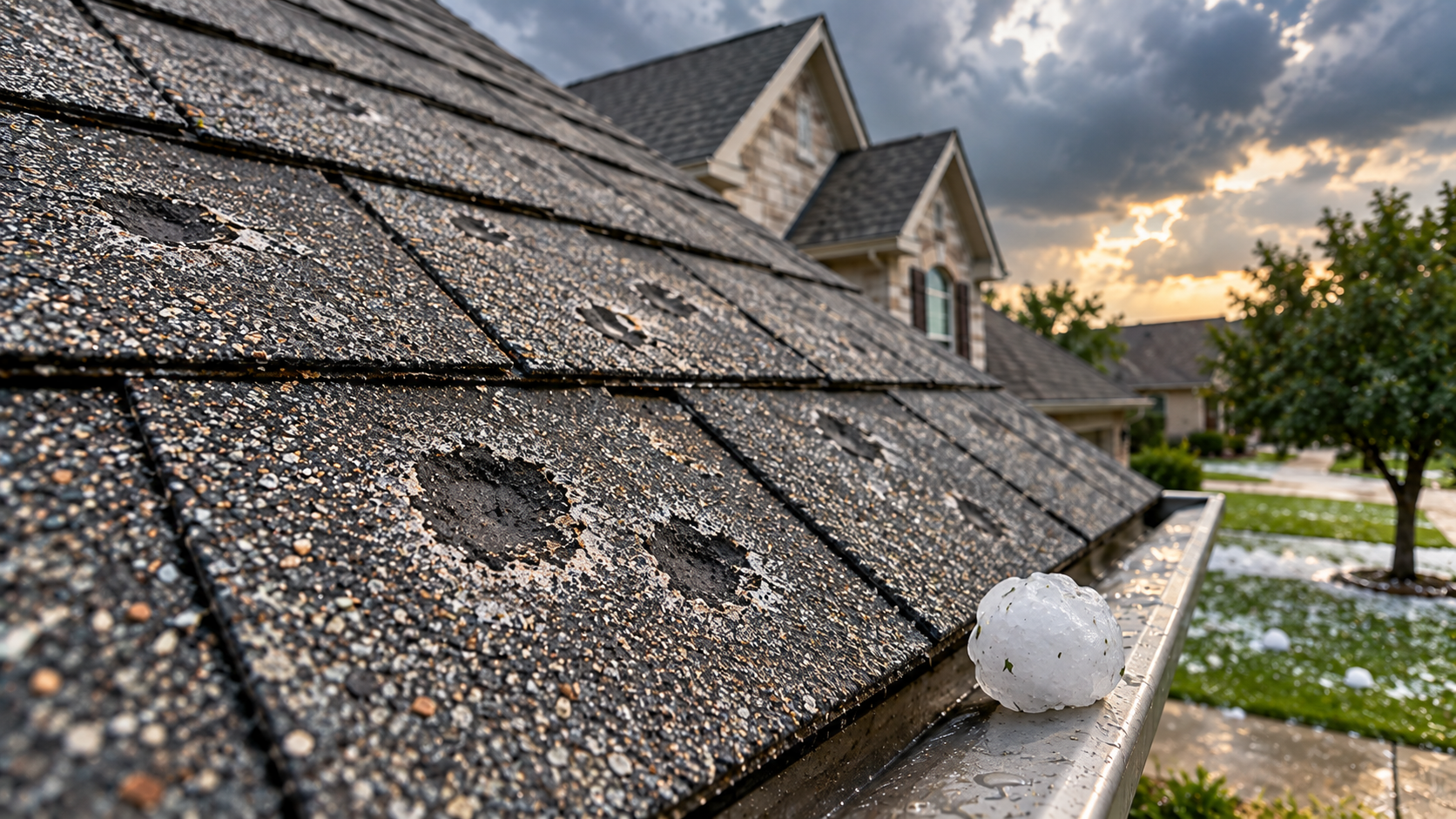
Asphalt shingles have a protective surface layer of mineral granules. When hail strikes, the appearance of the impact depends on the force of the hailstone and the condition of the shingle. A severe impact can displace granules or affect the asphalt layer beneath them.
Dark Impact Marks
Fresh hail impacts can sometimes appear darker than the surrounding shingle because granules have been displaced and more of the asphalt surface is visible.
Localized Granule Loss
Hail may knock granules away in concentrated areas. This differs from the more uniform granule loss that can occur as shingles naturally age.
Bruised or Soft Areas
Some impacts can affect the shingle beneath the visible surface. Roofing professionals may evaluate suspected impact areas for changes in the material and surrounding mat.
Cracks or Broken Material
Larger hailstones or severe impacts can contribute to cracking or physical damage, particularly when roofing materials are older or already weathered.
Hail Damage Can Look Different Across the Roof
A hailstorm does not necessarily affect every roof slope equally. Wind direction can drive hail toward one side of a house more aggressively than another. Roof pitch, nearby trees, neighboring structures and the orientation of the home can all influence exposure.
This is why checking only one visible section from the driveway may not provide a complete picture. A professional inspection can examine multiple slopes as well as flashing, vents, penetrations and other roof components.
Hail Damage vs. Normal Roof Wear
One of the most important distinctions is between storm-related impact damage and ordinary aging. Asphalt shingles naturally lose some granules over time. Foot traffic, installation conditions, heat and years of weather exposure can also affect their appearance.
| What You See | Possible Hail Indicator | Could Also Be |
|---|---|---|
| Localized dark spots | Impact-related granule displacement | Natural color variation or prior wear |
| Granules in gutters | Recent storm impact may increase granule loss | Normal aging and shedding |
| Cracked shingles | Severe impact can contribute | Age, thermal stress or other damage |
| Dented metal vents | Can indicate hail exposure | Previous impacts or mechanical damage |
| Roof leak | Storm damage may create an entry point | Flashing, age or unrelated roof defects |
Because several conditions can create similar-looking marks, a single visual clue should not be treated as proof by itself.
What Does Hail Damage Look Like on Roof Vents and Flashing?
Metal components can sometimes provide more visible signs of hail exposure than shingles. Depending on the material and storm severity, roof vents, flashing or other metal surfaces may show small dents or impact marks.
These signs can help establish that hail reached the property, but they do not automatically establish the condition of the shingles. Each roofing component still needs to be evaluated on its own.
Can Gutters Show Signs of Hail Damage?
Yes. Gutters and downspouts may show dents, deformation or other impact marks after a hailstorm. You may also notice an unusual accumulation of shingle granules in the gutter system.
Granules alone are not conclusive because shingles shed some material naturally, particularly as they age. However, a noticeable change immediately after severe hail can be one reason to request an inspection.
If your gutters were also affected, National Install provides gutter installation and gutter services in Fort Worth and DFW.
Did Hail Hit Your Fort Worth Home?
Don’t rely on a driveway inspection alone. National Install can evaluate the roof, identify visible roofing problems and explain whether repair or replacement should be considered.
Does Hail Damage Cause an Immediate Roof Leak?
Not always. Severe physical damage can create an immediate path for water, but some roof problems may not produce a visible interior leak right away. This is one reason homeowners should pay attention to both exterior storm exposure and changes inside the home after severe weather.
Look for new ceiling stains, damp areas, water near attic penetrations or other moisture that was not present before the storm. Water can travel along framing and roof decking, so the visible interior stain may not be directly below the exterior entry point.
How Big Does Hail Need to Be to Damage a Roof?
There is no single hailstone size that guarantees roof damage. The result depends on several interacting factors, including hail density, wind speed, impact angle, roofing material, roof age and the condition of the roofing system before the storm.
Large hail generally creates more concern, but smaller hail driven by strong winds may still affect some materials. Conversely, the presence of hail does not automatically mean a roof has sustained functional damage.
What Should You Do After a Hailstorm?
1. Wait Until Conditions Are Safe
Do not inspect the exterior during lightning, high winds or active hail. Wait until the storm has completely passed.
2. Check the Property From the Ground
Look for hailstones, damaged plants, dented gutters, fallen branches and roofing debris. These observations can help document the severity of the storm without requiring you to climb onto the roof.
3. Check Inside the Home
Look for fresh water stains, drips or damp areas. If water is entering the home, protect belongings where safely possible and avoid electrical hazards.
4. Photograph Visible Conditions
Photograph safely visible damage and record the date of the storm for your records.
5. Arrange a Professional Roof Inspection
If your property experienced significant hail or you see possible roof damage, an inspection can determine whether the roof needs localized repair or whether more extensive work should be considered.
Does Hail Damage Mean You Need a New Roof?
No. Hail exposure does not automatically mean roof replacement is necessary. A roof with limited damage and substantial useful life remaining may be repairable. More extensive damage on an older roofing system may lead to a broader discussion about replacement.
The decision should consider the extent of damage, roof age, existing condition and repair history. See our guide to roof repair vs. roof replacement for a detailed comparison. If your roof is already older, our article on when to replace a roof in Fort Worth provides additional context.
What About Homeowners Insurance and Hail Damage?
Insurance coverage depends on your individual policy, the cause and timing of the loss, exclusions, deductibles and the insurer’s assessment. A roofing contractor can document observed roof conditions and provide information about repair or replacement work, but the insurance carrier determines coverage under the policy.
Texas homeowners can also review consumer guidance from the Texas Department of Insurance. Avoid assuming that the presence of hail automatically guarantees coverage or a complete roof replacement.
Frequently Asked Questions About Hail Damage
What is the most common sign of hail damage on shingles?
Potential indicators include localized impact marks and areas where granules have been displaced. The appearance varies, and similar marks can result from normal wear or other causes, so professional evaluation is useful.
Can I see hail damage from the ground?
You may see missing roofing material, damaged gutters or obvious debris impacts from the ground, but many shingle-level hail marks are difficult to identify safely at that distance.
Do roof dents always mean hail damage?
No. Different materials can show previous mechanical damage, wear or other impacts. The pattern, location, surrounding conditions and recent storm history all matter.
Can hail damage a roof without breaking shingles?
Yes. Hail can affect the surface or underlying material without visibly breaking a shingle. The significance of those impacts depends on the roofing system and severity of the event.
How soon should I have my roof checked after hail?
If a significant hailstorm affected your property or you notice possible damage, arrange an inspection promptly rather than waiting for an interior leak to appear.
Professional Hail Damage Roof Inspection in Fort Worth
Hail damage can range from obvious physical damage to subtle shingle impacts that are difficult for a homeowner to assess from the ground. The safest approach is to document what you can see, watch for signs of water intrusion and have the roof evaluated when severe hail has affected your property.
National Install serves Fort Worth and surrounding DFW communities with roofing and gutter services. If your home was recently hit by hail, request a free estimate, explore our Fort Worth roofing services, or learn more about roof repair in Fort Worth.