Your roof can look perfectly normal from the driveway while still developing problems around flashing, vents, valleys or other vulnerable areas. That is why a professional roof inspection goes beyond simply looking for missing shingles.
For Fort Worth and DFW homeowners, inspections can be particularly useful after hail, high winds or severe thunderstorms, when buying or maintaining a home, or when deciding between roof repair and roof replacement. Here is what homeowners can generally expect during a thorough inspection.
What Is a Professional Roof Inspection?
A professional roof inspection is an organized assessment of the condition of a roof and the components that help it shed water and protect the structure. The exact process depends on roof type, pitch, accessibility, weather and safety conditions.
Inspection does not always mean physically walking every section of a roof. Steep slopes, wet surfaces, damaged decking, fragile materials or other hazards may require an inspector to use safe alternative observation methods. What matters is that the accessible roofing system is evaluated methodically rather than relying on a quick visual glance.
What Does a Roof Inspector Check?
Roof Covering
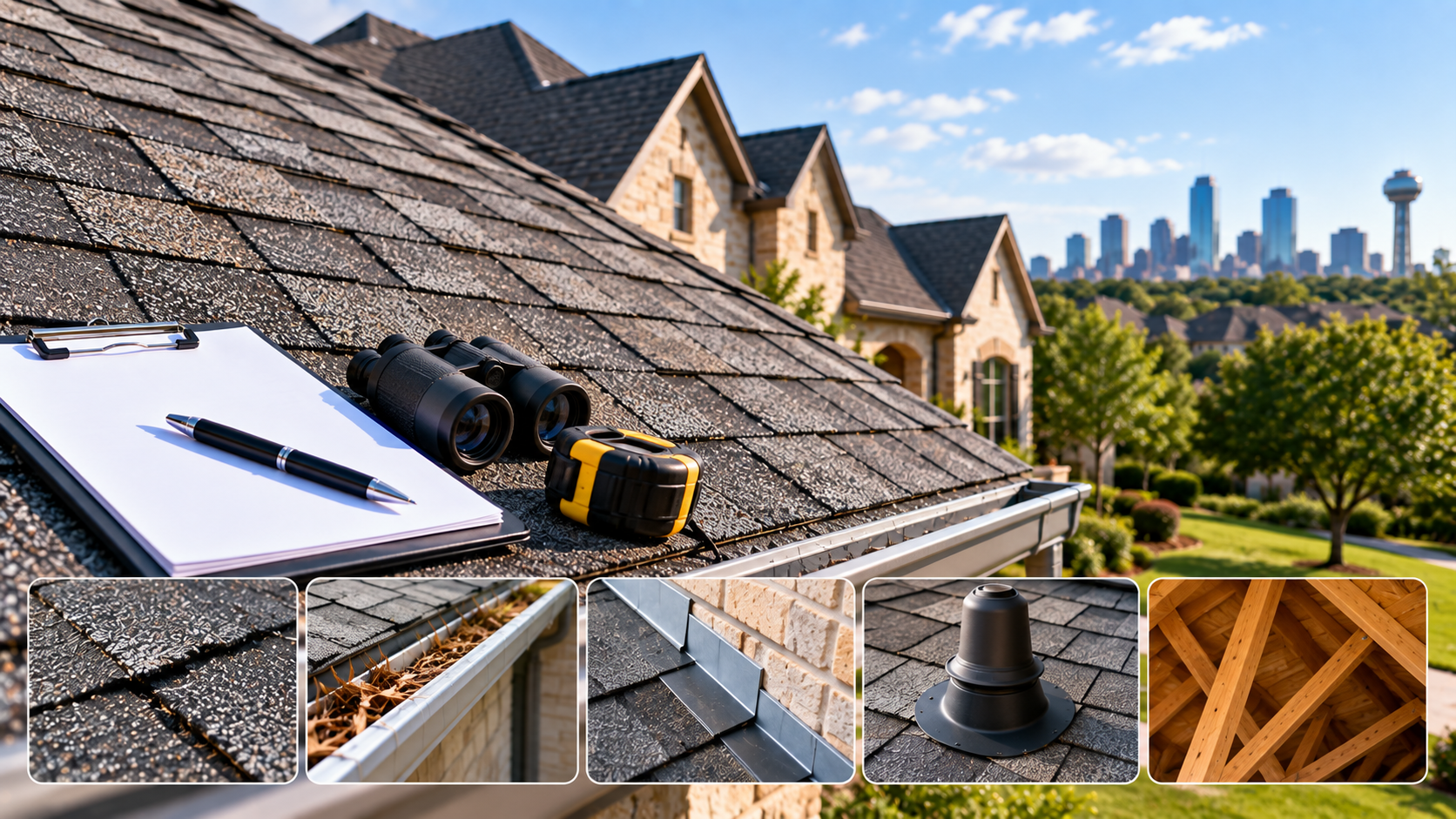
Shingles or other roofing materials are checked for missing, lifted, cracked, deteriorated or visibly damaged areas and for unusual wear patterns.
Flashing & Valleys
Flashing around walls, chimneys, valleys and transitions is examined because these areas are important to controlling water movement.
Vents & Penetrations
Plumbing vents, exhaust vents, roof vents and other penetrations are reviewed for visible deterioration, failed seals or installation concerns.
Gutters & Drainage
Gutters, downspouts and roof edges can reveal drainage problems, debris buildup, storm impact or excessive shingle granule accumulation.
Roof Structure
The inspector looks for visible sagging, irregular roof planes, soft-looking areas or other conditions that may justify closer evaluation.
Interior or Attic Signs
Where accessible and appropriate, attic or interior areas may be checked for staining, moisture evidence, daylight at openings or ventilation concerns.
What Happens During a Roof Inspection? Step by Step
How Are Shingles Inspected?
On an asphalt shingle roof, the inspector is looking for more than obvious missing shingles. The review may include lifted or creased tabs, cracks, localized granule loss, exposed fasteners, deteriorated edges, unusual wear and impact-related marks.
Age-related wear and storm damage can sometimes look similar to an untrained eye. Context matters. The inspector considers the pattern, location and surrounding condition of the roof rather than treating one mark as proof of a particular cause.
If hail is a concern, see our detailed guide on what hail damage can look like on a roof.
Why Flashing Is an Important Part of the Inspection
Flashing helps direct water away from joints and transitions. It is commonly found around chimneys, walls, valleys and roof penetrations. Even when the main roof covering looks good, compromised flashing can create a path for water.
An inspector may look for loose, displaced, corroded or poorly integrated flashing and for sealant conditions where sealants are part of the detail. The objective is to understand whether water is being directed over and away from vulnerable transitions.
Concerned About the Condition of Your Roof?
National Install serves Fort Worth and surrounding DFW communities. If you have noticed leaks, storm damage, aging shingles or other roofing concerns, we can evaluate the roof and discuss appropriate next steps.
Are Gutters Included in a Roof Inspection?
Gutters are closely related to roof performance because they collect and direct runoff. A roofing inspection may include visible gutter and downspout conditions, attachment, debris accumulation and signs of damage around roof edges.
Granules collecting in gutters can occur as asphalt shingles age, although the amount and context matter. Gutters can also show hail dents or become loosened during severe weather.
If the drainage system needs attention, National Install also provides gutter services in Fort Worth.
What Can an Attic Inspection Reveal?
When an attic is safely accessible and part of the inspection scope, viewing the roof from underneath can provide useful information. An inspector may observe water stains, damp areas, visible decking conditions, ventilation configuration or daylight around unintended openings.
Interior evidence is especially valuable because the point where water appears inside is not always directly below the exterior entry point. Water can travel along decking, framing or other surfaces before becoming visible.
What Does Storm Damage Look Like During an Inspection?
After a North Texas storm, an inspector may look for wind-lifted or missing shingles, creases, impact marks, damaged ridge materials, compromised vents, flashing displacement and gutter damage. Storm severity can vary substantially even between nearby homes.
Some problems are obvious immediately; others are subtle. If your neighborhood recently experienced severe weather, our guides to signs your roof may need repair after a Texas storm and what to do after roof storm damage in Fort Worth explain the next steps in more detail.
Does a Roof Inspection Mean You Need a New Roof?
No. The purpose of an inspection is to understand roof condition, not automatically recommend replacement. A roof may need minor maintenance, localized repair, monitoring or more extensive work depending on what is found.
Factors such as roof age, extent of damage, recurring leaks, material condition and previous repairs can influence the decision. Our roof repair vs. roof replacement guide explains those considerations.
| Inspection Finding | Possible Next Step |
|---|---|
| Small localized issue | Maintenance or targeted repair may be appropriate |
| Damaged flashing or penetration detail | Repair the affected detail and evaluate surrounding materials |
| Storm damage in multiple areas | Document the condition and assess repairability and overall roof condition |
| Recurring leaks on an older roof | Compare repair cost and expected remaining service with replacement |
| No significant concerns found | Continue routine maintenance and periodic observation |
How Long Does a Professional Roof Inspection Take?
There is no single inspection duration. A simple accessible roof may take less time than a large, steep or complex roof with multiple levels, valleys, dormers and penetrations. Storm damage, attic access and documentation requirements can also affect the time needed.
A thorough inspection should be driven by the roof’s conditions and complexity rather than by an arbitrary number of minutes.
When Should Fort Worth Homeowners Get a Roof Inspected?
Common Times to Consider an Inspection
- After a significant hail or wind event.
- When you notice a ceiling stain or active leak.
- When shingles appear missing, lifted or damaged.
- Before deciding whether to repair or replace an aging roof.
- When planning major roof maintenance or improvements.
- When gutters or roof edges show unexplained damage.
- When you want a clearer understanding of current roof condition.
Roof age is also useful context. If you are unsure how age and Texas weather interact, read how long roofs typically last in Texas.
Can You Inspect Your Own Roof?
Homeowners can safely observe many warning signs from the ground, such as missing shingles, debris, damaged gutters or staining on ceilings. However, climbing onto a roof introduces fall hazards and can also damage roofing materials if you do not know where it is safe to step.
For a closer evaluation, particularly after a storm or when a leak is present, professional inspection is the safer approach. Avoid climbing onto a wet, steep or visibly damaged roof.
What Should You Receive or Learn After the Inspection?
The useful outcome of an inspection is a clear understanding of observed roof conditions. Depending on the contractor and inspection scope, documentation may include photographs, notes, an explanation of problem areas and recommendations for maintenance, repair or replacement.
Ask questions if something is unclear. A homeowner should understand what was observed, why a repair is recommended, what part of the system is affected and what work is being proposed before approving a project.
Choosing who performs the inspection matters too. See how to choose a roofing contractor in Fort Worth for a practical contractor-comparison checklist.
Frequently Asked Questions
What is checked during a professional roof inspection?
A typical inspection can include roofing materials, flashing, valleys, vents and penetrations, roof edges, gutters, drainage and visible structural or attic conditions when accessible and within scope.
Will a roof inspection find every leak?
An inspection can identify many visible conditions associated with leaks, but water intrusion can be complex. Some situations may require additional testing or investigation to determine the exact entry point.
Should I get my roof inspected after hail?
If your property experienced significant hail or you notice signs of damage, a professional inspection can help document the roof’s current condition and identify areas that may need attention.
Does a roof inspector need to walk on the roof?
Not always. Roof pitch, surface condition, weather and safety considerations determine whether walking the roof is appropriate. Safe alternative observation methods may be used when direct access is unsuitable.
Can an inspection tell me whether to repair or replace my roof?
The findings provide important information for that decision. Roof age, damage extent, leak history, repairability and overall condition should all be considered before choosing repair or replacement.
Professional Roof Inspections in Fort Worth, TX
A professional roof inspection gives homeowners better information about the condition of one of the home’s most important exterior systems. For Fort Worth properties exposed to Texas heat, hail and wind, identifying small issues before they become larger problems can make maintenance decisions easier and more informed.
National Install provides roofing services across Fort Worth and surrounding DFW service areas. If you need help evaluating roof damage or planning the next step, request an evaluation.