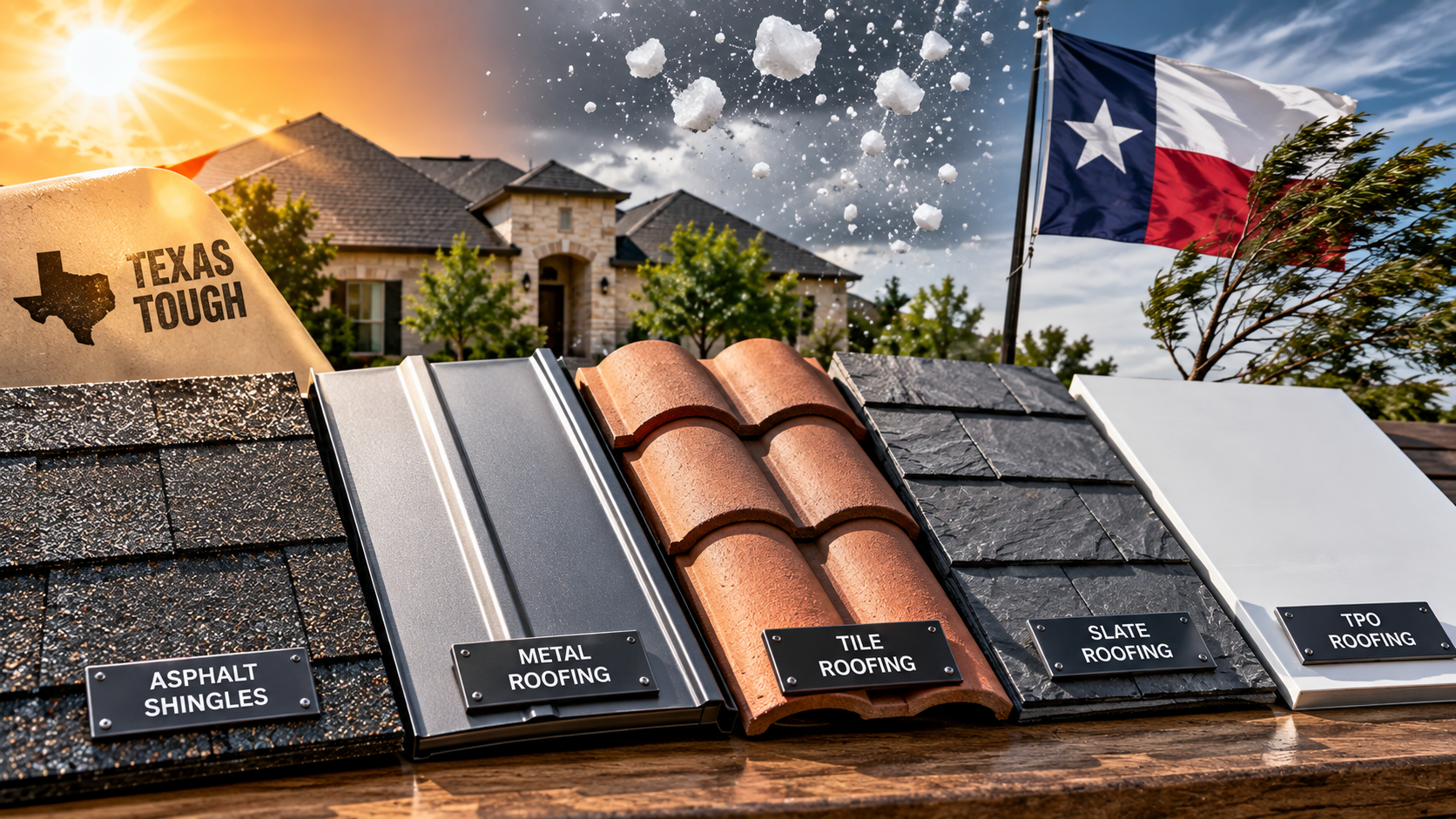
Texas roofs face a difficult combination of intense summer heat, strong UV exposure, severe thunderstorms, hail and high winds. That means choosing a roofing material is not simply about appearance. Homeowners should compare how the entire roofing system performs under the weather conditions common to Fort Worth and DFW.
National Install provides roofing services in Fort Worth and surrounding communities. This guide compares several common residential roofing materials and the characteristics that matter most when selecting a roof for North Texas.
What Makes a Roofing Material Good for Texas Weather?
A roof in North Texas needs to manage more than one environmental stress. A material that performs well in heat may still need the correct product rating and installation method to resist hail or high winds.
Heat and UV Resistance
Long periods of sun and high temperatures can accelerate aging. Roofing color, surface characteristics, ventilation and the roof assembly all influence heat performance.
Hail Resistance
Impact-resistant products are designed and tested to withstand impact better than conventional alternatives, although no residential roofing material should be treated as completely hail-proof.
Wind Performance
Wind resistance depends on the product, fastening pattern, roof geometry, edge details and installation. Manufacturer requirements matter as much as the material category.
Long-Term Durability
Service life, repairability, maintenance requirements and installation quality should be considered alongside the initial project price.
Best Roofing Materials for Texas Heat, Hail and Wind
| Material | Texas Advantages | Considerations |
|---|---|---|
| Architectural Asphalt Shingles | Good value, broad availability, many styles and performance options | Product quality and impact/wind ratings vary |
| Impact-Resistant Shingles | Designed for improved impact performance in hail-prone regions | Higher initial cost than standard shingles; not hail-proof |
| Metal Roofing | Long service potential, strong wind performance, heat-reflective options | Higher upfront investment; installation expertise is critical |
| Concrete or Clay Tile | Excellent heat performance and distinctive appearance | Heavy; structure and impact characteristics must be evaluated |
| Slate | Very long potential lifespan and premium appearance | High cost, substantial weight and specialized installation |
1. Architectural Asphalt Shingles
Architectural asphalt shingles are one of the most practical choices for Texas homeowners because they combine cost efficiency, appearance and a wide range of performance levels. They are available in numerous colors and profiles, making them suitable for many Fort Worth neighborhoods and home styles.
The key is to look beyond the word asphalt. Different shingle lines can have different wind ratings, warranties, construction methods and impact classifications. A premium architectural shingle can be substantially different from a basic entry-level product.
Why They Work Well in North Texas
Quality architectural shingles can provide dependable performance when installed as part of a complete roofing system with suitable underlayment, flashing, ventilation and manufacturer-approved fastening. They are also relatively straightforward to repair if a localized area is damaged.
For homeowners considering a complete reroof, see our Fort Worth roof replacement service and our guide to roof replacement costs in Fort Worth.
2. Impact-Resistant Asphalt Shingles
Hail is a major concern in North Texas, so impact-resistant shingles deserve special consideration. Many roofing products are tested using recognized impact standards, and homeowners may encounter products marketed with a Class 4 impact rating.
A higher impact classification can indicate improved resistance under the applicable laboratory test, but it does not mean the shingle cannot be damaged by real-world hail. Hail size, shape, wind speed, roof age, temperature and angle of impact can all influence the outcome.
To recognize common warning signs, read what hail damage can look like on a roof.
Planning a New Roof in Fort Worth?
National Install can help you compare roofing systems based on your home, budget and North Texas weather exposure.
3. Metal Roofing
Metal roofing is another strong option for Texas homes. Properly specified metal systems can offer long service life, strong wind resistance and finishes that help manage solar heat. Standing-seam metal is especially popular for homeowners seeking a clean architectural appearance and a durable long-term system.
Metal roofing performance depends heavily on system design. Panel type, metal thickness, clips or fasteners, seams, flashing and perimeter attachment all matter. A poorly installed premium material can perform worse than a correctly installed conventional system.
Does Metal Roofing Handle Hail?
Metal roofs can perform well during hail, but results vary by panel profile, gauge, substrate and hail severity. Some hail may leave cosmetic dents without creating a functional leak, while larger or wind-driven hail can cause more significant damage. Product-specific testing and warranty language should be reviewed before choosing a system.
If you are comparing the two most common choices, our next guide covers asphalt shingles vs. metal roofing for Texas homes.
4. Clay and Concrete Tile
Tile roofing has a long history in hot climates. Clay and concrete tiles can provide excellent thermal durability and create a distinctive appearance, particularly on Mediterranean, Spanish and Southwestern-style homes.
However, tile is considerably heavier than asphalt shingles and many metal systems. The structure must be suitable for the additional load. Individual tiles can also crack from impact or foot traffic, so repair access and local hail exposure should be considered.
5. Slate Roofing
Natural slate is a premium roofing material known for exceptional longevity and appearance. For the right structure and budget, it can provide a very long-lasting roof.
Slate is not the default recommendation for most Fort Worth homeowners because it is expensive, heavy and requires specialized installation and repair knowledge. When evaluating slate, structural suitability and installer expertise are essential.
What About TPO and Other Single-Ply Roofing?
TPO and similar single-ply membranes are common on low-slope and commercial roofs. They are not typically the primary material used on the steep-slope roof of a conventional Fort Worth house. Homes with low-slope additions or specific architectural sections may use membrane roofing where appropriate.
This distinction matters because the best material depends partly on roof slope and design. A product that is excellent for a low-slope roof is not automatically the correct choice for a steep residential roof.
Which Roofing Material Is Best for Texas Heat?
Heat performance is influenced by more than the surface material. Reflectance, roof color, attic ventilation, insulation and the complete roof assembly can affect temperatures and energy performance.
Metal roofing is available with reflective finishes, while asphalt shingles are offered in many colors and some products incorporate reflective technologies. Tile can also perform well in hot climates. Rather than choosing solely by material name, compare the specifications of the actual product being proposed.
Which Roofing Material Is Best for Texas Hail?
For hail-prone areas, impact-resistant shingles and suitably specified metal systems are common options. The product’s tested impact performance is useful when comparing materials, but no rating guarantees that a roof will survive every hailstorm without damage.
If a recent storm has already affected your home, start with our guides to signs a roof needs repair after a Texas storm and what to do after storm damage in Fort Worth.
Which Roofing Material Is Best for High Winds?
Wind performance is system-specific. Manufacturers publish wind-related installation requirements and ratings for their products, but real-world resistance also depends on roof shape, deck condition, fasteners, starter courses, edge attachment and flashing.
This is why workmanship is critical. Selecting a high-rated roofing product without following its installation requirements can undermine the expected performance.
Questions to Ask Before Choosing a Texas Roof
- What wind rating applies to the specific roofing product?
- Does the product have an impact-resistance classification?
- What warranty applies to the material and installation?
- Is the existing roof deck in suitable condition?
- How will flashing, valleys, penetrations and roof edges be handled?
- Does the attic have appropriate ventilation?
- How does the material fit the home’s architecture and budget?
- What maintenance should be expected over the roof’s service life?
Roofing Material vs. Installation Quality
The material is only one part of roof performance. Underlayment, decking, flashing, ventilation, fasteners, starter shingles or edge details and workmanship combine to create the complete roofing system.
A well-selected product installed incorrectly can develop problems prematurely. Conversely, a properly installed roofing system using a suitable material can provide dependable protection for many years. This is one reason choosing the right roofing contractor in Fort Worth is as important as choosing the material.
How Long Do Different Roofing Materials Last in Texas?
There is no single lifespan that applies to every roof. Product quality, installation, ventilation, maintenance and storm exposure can shorten or extend service life. Texas weather can be particularly demanding, so national averages should not be treated as guarantees.
For a deeper explanation of the variables, see how long a roof lasts in Texas.
Should You Repair or Upgrade to a Different Material?
If a roof has isolated damage and substantial service life remaining, repair may be appropriate. If damage is widespread, the roof is aging or recurring repairs are becoming common, replacement may offer better long-term value.
Our Fort Worth roof repair team can evaluate localized problems, while our guide to roof repair vs. roof replacement explains the decision in more detail.
Frequently Asked Questions About Texas Roofing Materials
What is the best roof for Texas heat?
Metal, tile and quality asphalt systems can all work well in Texas heat when properly specified. Product reflectance, color, ventilation, insulation and installation details should be considered along with the material.
What roofing material is best for hail?
Impact-resistant shingles and appropriately specified metal roofing are commonly considered in hail-prone areas. No residential roof is completely hail-proof, so compare product-specific impact testing and warranties.
Are Class 4 shingles worth considering in Texas?
They can be a useful option for homeowners concerned about hail because Class 4 products are designed to meet a higher impact-test classification. Cost, product warranty and the home’s specific needs should also be considered.
Is metal roofing better than shingles in Texas?
Not automatically. Metal can offer excellent longevity and wind performance, while architectural shingles often provide a strong balance of cost, performance and repairability. The better choice depends on priorities and budget.
Does a darker roof make a Texas home hotter?
Roof color can influence solar heat absorption, but the complete system matters. Reflective properties, ventilation and insulation also affect heat transfer into the home.
Choosing the Right Roof for Your Fort Worth Home
The best roofing material for Texas weather is the one that matches your home’s structure, roof design, budget and exposure while meeting appropriate product and installation requirements. For many homeowners, architectural or impact-resistant shingles provide excellent value. For others, a properly designed metal roof can justify its higher initial investment through durability and long-term performance.
National Install serves Fort Worth and surrounding DFW service areas with roof repair and replacement services. If you are comparing materials for an upcoming project, request a free estimate to discuss the options for your home.